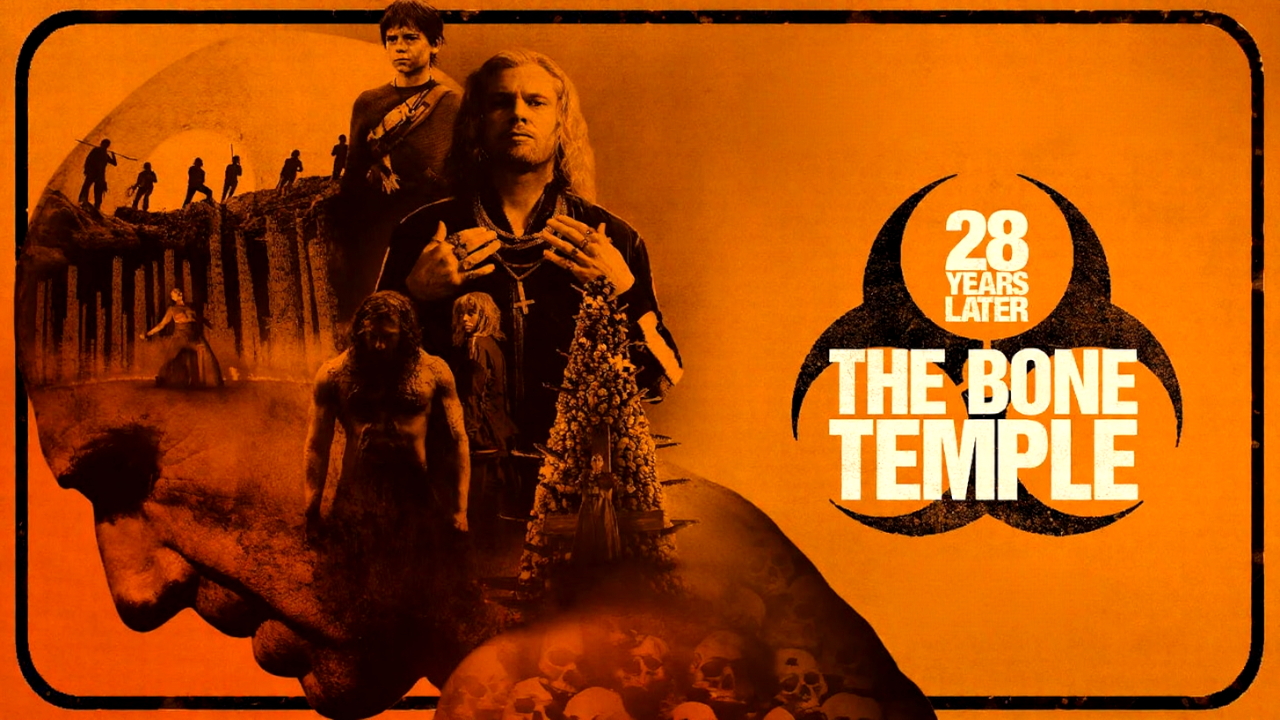
28 Years Later: The Bone Temple is a 2026 zombie horror movie filled with dread and dark surprises. Horror Brains dives deep into its shadows, breaking down what works, what fails, and delivering a final verdict.
Intro
In the bone-scattered wastelands of post-virus Britain, 28 Years Later: The Bone Temple forces the apocalypse’s ghosts into broad daylight with a cinematic ferocity only a filmmaker unafraid of horror’s spiritual marrow could achieve. Nia DaCosta tears the undead mythos from rote gore and recasts it in a crucible of cultish desperation, moral decay, and human fracture. At its core stands a lonely ossuary-builder haunted by his own obsessiveness, a feral gang masquerading as salvation, and a child caught in the crossfire of belief and brutality. This isn’t just another zombie sequel — it’s a visceral meditation on what civilization sacrifices when its core truths collapse, and it confirms Horror Brains’ reputation for championing horror that thinks as hard as it bites.
Plot in Brief
Dr. Ian Kelson tends a towering ossuary while young Spike falls under Sir Jimmy Crystal’s violent cult, igniting a harrowing collision of survival, belief, and humanity’s last flicker against an ever-shrinking world.
What Works
A fearless blend of genres. This isn’t mere undead mayhem. DaCosta seamlessly infuses cult psychodrama, apocalyptic survival, dark ritual absurdity, and even absurdist energy into a single cinematic current. Where other sequels dilute tension with genre repetition, The Bone Temple sharpens every beat into thematic resonance — gore, satire, and pathos converge without ever shortchanging mood.
Performances that cut deep. Ralph Fiennes redefines what depth can mean in horror acting, embodying Dr. Kelson’s paradoxical humanity with bone-deep vulnerability and eerie conviction. Jack O’Connell’s Sir Jimmy Crystal is a charismatic nightmare — part preacher, part trickster, always unsettling — while Alfie Williams brings raw emotional texture to Spike’s perilous journey. These aren’t archetypes; they’re fractured souls surviving in a fractured world, and they elevate every scene they inhabit.
Atmosphere so thick it drips. Cinematography drapes post-collapse Britain in grim majesty. Desecrated ruins, bone altars crowned by storm-lit skies, and fire-lit ritual yards make every frame feel like a requiem for humanity. There’s an almost religious dread to DaCosta’s visual grammar — shadowy edges, sudden violence, and concentrated silence build a world where danger lurks in both wind-whipped plains and fractured psyches.
Themes that resonate. This film interrogates faith, extremism, memory, and what people cling to when the world stops making sense. The Jimmies’ warped fervor reflects the terrifying ease with which belief can tip into fanaticism. Kelson’s bone monuments become more than memorials — they’re a warning about the stories we choose to tell ourselves amid ruin.
Cultural depth. The Bone Temple doesn’t just riff on zombie lore — it confronts the societal echoes of catastrophe with eerie precision. It’s a meditation on mythmaking in a fractured society, the ways the young inherit trauma, and how charismatic figures can invert hope into horror. This cultural layer — where apocalypse becomes ideology — gives the film weight beyond its gore.
What Fails
Pacing in the middle act. There are stretches where the narrative’s momentum wavers under its own thematic ambition, dragging slightly as it struggles to balance character introspection with world-building. Horror Brains expects relentless propulsion, and at times the middle act loses that necessary kinetic drive.
Accessibility for casual viewers. This is not straightforward zombie fare. DaCosta demands emotional and intellectual engagement, which may leave viewers looking for simple thrills feeling adrift or alienated by the film’s thematic complexity. Casual genre fans might find themselves craving the visceral simplicity of earlier entries.
Uneven tone at times. The Bone Temple oscillates between brutal horror, dark comedy, and strange ritual spectacle, and while this daring blend usually pays off, there are moments when shifts in tone feel abrupt, momentarily fracturing the film’s emotional cohesion.
Final Verdict
28 Years Later: The Bone Temple asserts itself as one of the most ambitious entries in the undead canon — a bold, unsettling extension of the apocalypse that lingers long after the credits fade. DaCosta harnesses raw, visionary energy, and the cast pours unforgettable gravitas into a world at war with itself. At its best, this is horror with heart and horror with brains — exactly the kind Horror Brains demands: unsettling yet thoughtful, gory yet introspective, unrelenting yet rich in narrative heft. It slips occasionally, but it claws its way back with ambition and force unmatched by most genre fare. This is the kind of experience that reminds audiences why they came for the undead — and stayed for the truth beneath.
Horror Brains Score