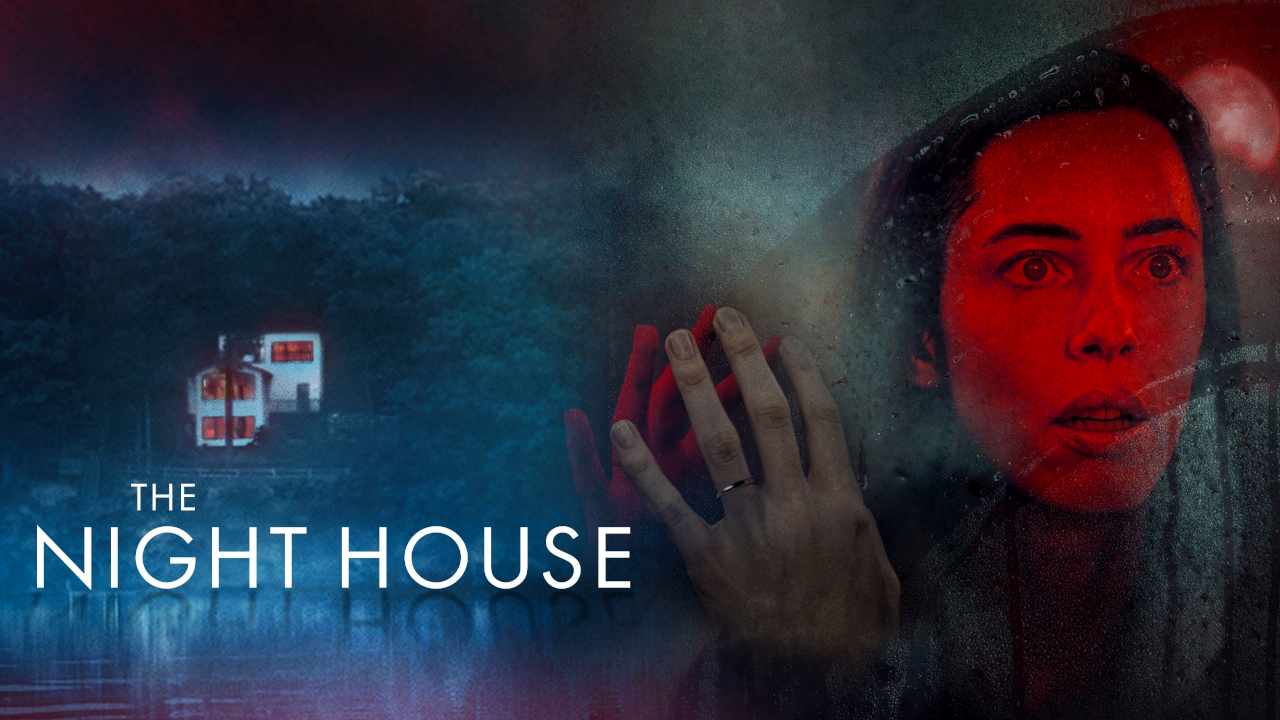
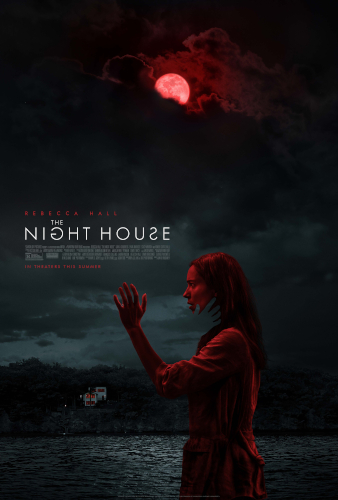
 The Night House is a supernatural horror movie put under the Horror Brains microscope, examining what works, what fails, and whether it ultimately delivers a horror experience worth watching.
Intro
Some haunted houses conceal ghosts. The Night House is more interested in the terrifying possibility that an empty room can conceal an idea. David Bruckner turns grief, architecture, and uncertainty into a remarkably controlled supernatural nightmare, allowing ordinary spaces to become threatening without constantly announcing where the danger lies. Rebecca Hall gives the movie its emotional gravity, carrying long stretches in which fear emerges as much from Beth’s state of mind as anything lurking around her. For Horror Brains, its greatest achievement is the uneasy relationship between psychological pain and supernatural menace: neither exists merely to decorate the other. The result is intelligent, visually inventive horror that understands anticipation can be considerably more disturbing than revelation.
Plot in Brief
Beth is grieving the sudden death of her husband Owen while remaining alone in the lakeside house he designed and built for them. Strange nighttime disturbances soon challenge the isolation she thought she understood. Searching through Owen’s possessions for answers, Beth discovers troubling photographs, unusual architectural plans, and secrets that force her to question both her marriage and the presence seemingly drawing closer.
What Works
Rebecca Hall Refuses to Make Grief Passive
Beth could easily have become another fragile protagonist wandering through dark rooms while the screenplay withholds answers. Hall gives her considerably sharper edges. Grief emerges through anger, sarcasm, exhaustion, alcohol, curiosity, and moments of startling emotional bluntness rather than a single sustained register of sadness. That unpredictability matters because it prevents the supernatural material from swallowing the character underneath it. Hall makes Beth credible even as her experiences become increasingly difficult to trust, creating a protagonist whose emotional instability complicates the mystery without reducing her to an unreliable-narrator gimmick.
Bruckner Makes Empty Space Feel Occupied
The movie’s most distinctive scares frequently involve almost nothing happening. Bruckner and cinematographer Elisha Christian manipulate architectural lines, reflections, silhouettes, and negative space until the eye begins assembling human shapes where none should exist. Doorways become frames within frames; structural details briefly resemble bodies; apparently empty corners demand inspection. Horror Brains rarely gets such a good reason to distrust furniture. The technique works because it recruits the viewer into creating the threat. Instead of simply revealing something frightening, the composition encourages constant searching, making the act of looking itself increasingly uncomfortable.
The House Becomes a Psychological Trap
Production design and cinematography transform the lakeside property from an enviable modern home into an environment that seems fundamentally wrong without abandoning its believable geography. Its openness is particularly effective. Huge windows and clean interiors should provide visibility and reassurance, yet they repeatedly expose Beth to darkness beyond the glass or leave empty areas behind her. As architectural discoveries accumulate, space becomes inseparable from the mystery. The house is not merely where the horror happens; its design becomes part of how the story communicates obsession, absence, doubling, and the unsettling possibility that familiar structures can conceal an entirely different logic.
Sound Knows Exactly When to Break the Silence
The visual restraint would lose much of its power without the aggressive precision of the sound design. Quiet stretches amplify footsteps, voices, music, and ordinary household noises until the smallest interruption feels invasive. When Bruckner does deploy a sudden sonic assault, it lands with unusual force because the preceding stillness has conditioned the ear to listen rather than merely wait for a jump scare. Ben Lovett’s score contributes without smothering that dynamic. The soundtrack creates the sensation that the house is communicating from somewhere just outside Beth’s understanding, turning listening into another source of uncertainty.
Grief Is the Foundation, Not the Explanation
Many horror movies use bereavement as shorthand for vulnerability before moving on to conventional supernatural business. Here, loss remains embedded in every discovery. Beth is not simply frightened by what might inhabit her home; she is trying to reconcile the man she loved with evidence suggesting parts of him were inaccessible to her. That gives the mystery emotional consequences beyond solving its mechanics. The screenplay understands that death leaves questions the survivor cannot necessarily answer, allowing supernatural dread and psychological anguish to reinforce one another without lazily suggesting that grief itself accounts for everything happening.
What Fails
The Mystery Is Stronger Before It Explains Itself
The Night House is at its most unnerving when architecture, dreams, grief, and supernatural suggestion overlap without clearly defined boundaries. As the screenplay begins connecting those elements into a more elaborate mythology, some of that elegant uncertainty gives way to machinery. The explanations are intriguing, but they require enough conceptual assembly that attention shifts from experiencing the nightmare toward decoding it. Nothing collapses completely, and ambiguity survives, yet the final movement cannot quite match the frightening simplicity of earlier sequences in which an empty room and an impossible silhouette were enough.
Owen’s Secrets Stretch Practical Credibility
The revelations surrounding Owen are thematically valuable because they radically complicate Beth’s understanding of her marriage, but their practical scale raises questions the screenplay cannot completely bury. Certain activities would seem extraordinarily difficult to conceal from a spouse sharing the same life and environment. That does not undermine the supernatural logic or emotional purpose behind the discoveries, but it creates a noticeable credibility gap precisely when the mystery needs its pieces to lock together. The movie asks for a little more logistical forgiveness than its otherwise meticulous construction would suggest.
Final Verdict
The Night House succeeds because its intelligence rarely comes at the expense of genuine fear. This is supernatural horror built around perception: what the eye invents in an empty space, what grief transforms in memory, and what becomes frightening once certainty disappears. Its mythology eventually becomes busier than its strongest ideas require, but that complication cannot erase the confidence of the filmmaking or the emotional force holding everything together. Rebecca Hall ensures the psychological material remains human while David Bruckner gives the supernatural threat an unusually sophisticated visual language. Horror Brains considers it an excellent example of modern haunted-house filmmaking that finds fresh anxiety inside familiar genre architecture. Viewers who prefer atmosphere, character, and accumulating dread over relentless spectacle should consider this essential viewing.
Horror Brains Score