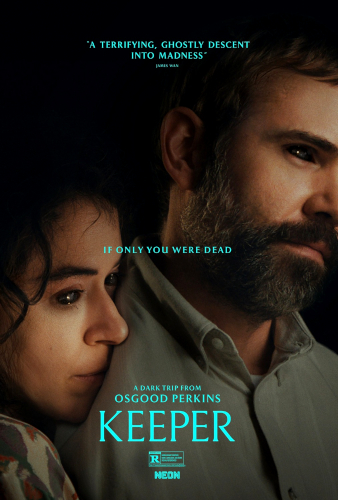
 Keeper is a 2025 folk horror movie filled with dread and dark surprises. Horror Brains dives deep into its shadows, breaking down what works, what fails, and delivering a final verdict.
Intro
Isolation becomes a pressure chamber in Keeper, a supernatural folk nightmare that folds relationship strain and ancient presence into one tightening trap. Osgood Perkins fashions the cabin setting into a quiet snare, using architecture, distance and routine to reveal cracks beneath the surface of a couple trying to reset their fractured bond. Tatiana Maslany carries the emotional anchor as subtle tensions turn into something predatory, with the forest pressing in and the house itself watching. Keeper operates less as a loud shock machine and more as a psychological descent, driven by ritual undertones and creeping inevitability. Horror Brains recognizes a story that uses stillness as its primary weapon.
Plot in Brief
Liz joins Malcolm for an anniversary retreat in a secluded cabin, hoping to repair distance between them. When Malcolm abruptly disappears, Liz is left to face an unseen entity tied to the land, forcing her into a confrontation with secrets far older than their relationship.
What Works
A fearless blend of genres. Keeper weaves its horror from romantic tension, folk-myth suggestion and supernatural invasion, refusing to settle into one comfortable lane. What begins as a relationship drama quickly becomes an atmospheric ritual story, where emotional unease opens the door to a presence lurking in the woods. Perkins mixes grounded human fractures with creeping, almost ancestral dread, using the silence of the setting as connective tissue. The result is a hybrid that feels familiar yet unsettlingly unsteady.
Performances that cut deep. Tatiana Maslany delivers the film’s backbone with a performance built on small fractures: glances held a second too long, breaths caught mid-thought, subtle shifts revealing dread without theatrics. Rossif Sutherland plays Malcolm with disarming ambiguity, warm one moment and cold the next, letting uncertainty become its own menace. Their dynamic creates a believable emotional foundation, making the supernatural escalation feel like a natural extension of hidden wounds rather than an abrupt genre shift.
Atmosphere so thick it drips. Perkins saturates Keeper with the heavy quiet of the woods, leaning on wide frames, shadowed windows and stillness that feels watchful. The cabin’s openness becomes a vulnerability, transforming sunlight into exposure and nighttime into suffocation. Sound design vibrates with faint groans, distant knocks and the hum of something old breathing beneath the floorboards. Every room feels invaded. Every silence feels pregnant. The result is dread built not from jump scares but from constant, creeping surveillance.
Themes that resonate. Keeper drills into trust, emotional erasure and the secrets partners bury to keep relationships afloat. Liz’s isolation forces her to examine the fragility of connection, while the lurking entity mirrors the weight of unspoken pain. The supernatural becomes a metaphor for the parts of a relationship that rot when left unacknowledged. This layered approach gives the horror surprising emotional bite, grounding its stranger elements in universal truths about intimacy, vulnerability and the cost of denial.
Cultural depth. The film draws from folk motifs rooted in land-bound mythology, tapping into stories of guardianship, inheritance and rituals tied to territory. The woods feel ancient, not because of overt exposition but through implication: symbols etched in walls, objects arranged with intent, patterns suggesting long-buried tradition. These touches add weight beyond the personal drama, hinting at history swallowing the present. Horror Brains values this subtle cultural echo, which enriches the story without overwhelming it.
What Fails
Pacing in the middle act. After a gripping setup, the second act stretches its tension thin. Scenes linger too long without offering new information or escalating danger, creating a lull that undercuts the film’s early momentum. The slow burn is intentional, but the narrative drifts instead of tightens. By the time the supernatural elements sharpen, the earlier drag dulls their impact, making the climax feel like it arrives out of necessity rather than natural build.
Accessibility for casual viewers. Keeper leans heavily on atmosphere, ambiguity and introspective fear. Viewers expecting clear rules, traditional scares or explicit mythology may find the film intentionally withholding. Its horror unfolds in implication rather than explanation, leaving certain narrative beats open to interpretation. Horror Brains understands this stylistic choice, but it inevitably narrows the film’s reach. The film demands patience and attention, qualities not all audiences bring to a supernatural folk story presented with this level of restraint.
Uneven tone at times. The film shifts between relationship drama, ritual mystery and supernatural dread, but the transitions aren’t always smooth. Some emotional scenes feel grounded and intimate, while others tilt into abstraction without full payoff. The finale delivers strong imagery yet skirts around thematic resolution, leaving a faint disconnect between the film’s emotional groundwork and its supernatural conclusion. This tonal wobble doesn’t derail the experience but keeps it from reaching its full potential.
Final Verdict
Keeper thrives on mood, myth and quiet menace, wielding its atmosphere with precision even when its pacing slips. Maslany’s performance elevates the emotional core, grounding the supernatural tension in something human and fragile. The folk elements ripple beneath the surface, giving the story a sense of inherited dread that lingers after the final frame. Though not built for viewers seeking loud shocks or clear explanations, the film rewards those drawn to slow, ritual-soaked horror. Its ambition and craft make its shadows worth exploring.
Horror Brains Score