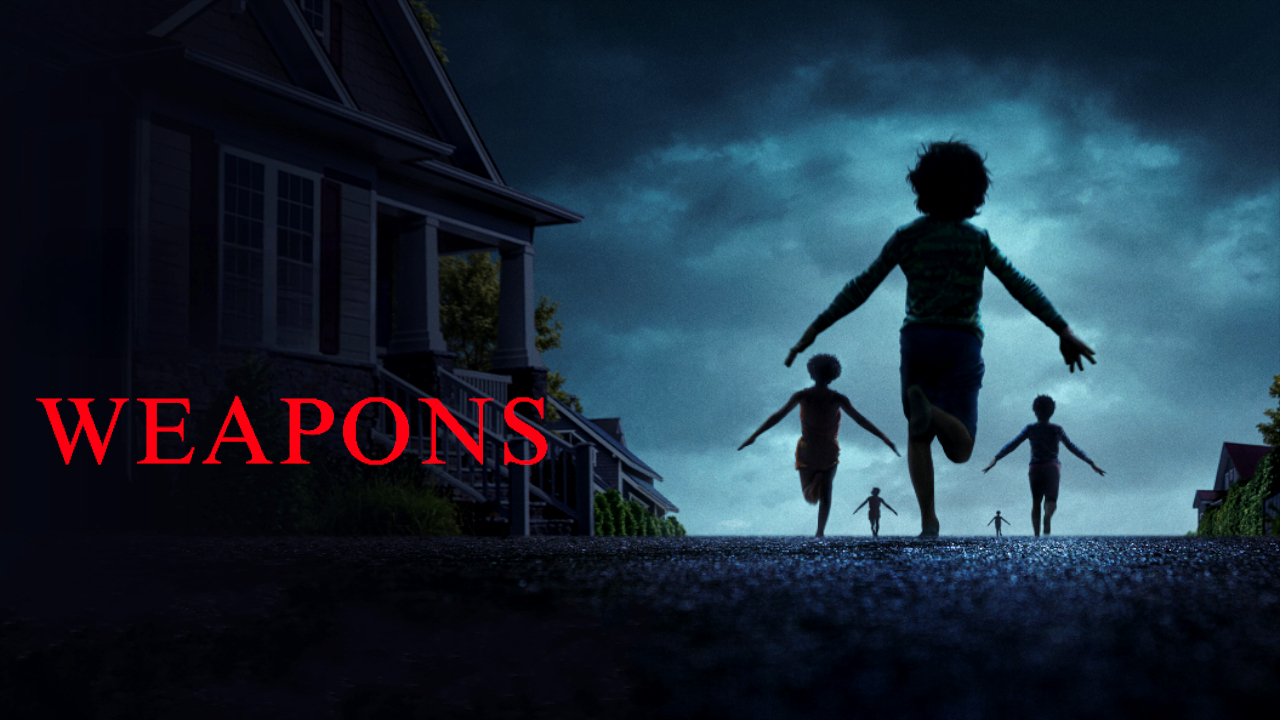
Weapons is a 2025 supernatural horror movie filled with dread and dark surprises. Horror Brains dives deep into its shadows, breaking down what works, what fails, and delivering a final verdict.
Intro
Weapons builds its horror from absence, transforming a quiet town into a place defined by what is missing rather than what is seen. When children vanish without explanation, the film embraces uncertainty, allowing dread to spread through silence, suspicion, fractured perspectives, and unanswered questions. Horror Brains recognizes this as a meticulously constructed descent into paranoia, where mystery and supernatural terror evolve together without rushing toward easy resolutions. Zach Cregger expands beyond conventional horror, weaving multiple viewpoints into a haunting narrative while maintaining relentless emotional pressure. Every revelation deepens the unease instead of providing comfort, creating an experience that lingers long after the final frame fades.
Plot in Brief
After a group of children mysteriously disappear overnight, a teacher and a grieving father search for answers, uncovering disturbing connections to an ancient supernatural force that threatens to unravel both their community and their understanding of reality itself.
What Works
A fearless blend of genres. Weapons confidently blends mystery, supernatural horror, psychological tension, and emotional drama into a remarkably cohesive narrative that refuses to settle into a single identity. The story shifts between interconnected perspectives, revealing carefully placed fragments that gradually assemble into a larger and increasingly disturbing picture. Rather than becoming convoluted, the ambitious structure rewards patience, sustaining suspense while allowing the mystery to grow naturally without sacrificing emotional weight or oppressive atmosphere.
Performances that cut deep. Julia Garner delivers a deeply controlled performance that balances vulnerability, resilience, and quiet determination, grounding the film’s emotional center with remarkable authenticity. Josh Brolin brings tremendous weight through restrained intensity, portraying grief with subtle precision instead of exaggerated emotion. Together, their performances create a believable human foundation that keeps every supernatural development emotionally anchored, ensuring the horror never drifts into spectacle for its own sake.
Atmosphere so thick it drips. The film generates dread through silence, isolation, and carefully composed visual storytelling rather than relentless shocks. Empty streets, shadowed interiors, and lingering camera movements create the constant sensation that something unseen is quietly closing in. Horror Brains recognizes this oppressive atmosphere as the film’s greatest achievement, demonstrating that carefully sustained tension can be far more unsettling than endless jump scares or overwhelming visual excess.
Themes that resonate. Beyond its supernatural mystery, the narrative explores grief, guilt, parental fear, collective trauma, and humanity’s desperate need for answers when confronted by the impossible. The disappearances become more than isolated events, evolving into psychological wounds that spread throughout the entire community. These layered themes give every frightening moment greater emotional significance, allowing the horror to resonate long after the immediate scares have faded.
Cultural depth. Weapons captures a broader anxiety surrounding the fragility of modern communities and the illusion of everyday safety. By examining how fear rapidly spreads through neighbors, families, and local institutions, the story reflects the speed with which trust collapses under extraordinary circumstances. This grounded social perspective strengthens the supernatural narrative, making the unimaginable feel disturbingly believable within an otherwise familiar world.
What Fails
Pacing in the middle act. The film briefly loses momentum as it broadens its perspective and devotes additional time to developing multiple narrative threads. While these sequences ultimately strengthen the overall story, they temporarily soften the mounting pressure established during the opening act. A tighter progression through the middle section would have preserved the escalating sense of urgency without sacrificing the narrative depth that defines the experience.
Accessibility for casual viewers. Its layered storytelling and constantly shifting perspectives demand sustained attention from beginning to end. Viewers expecting a more conventional supernatural thriller may struggle with the fragmented narrative, causing several key reveals to lose part of their intended impact. The complexity ultimately rewards patient audiences, but it may create distance for those seeking a more direct and immediately accessible horror experience.
Uneven tone at times. Balancing emotional drama with escalating supernatural horror proves challenging during several important transitions. Certain scenes move between grounded human tragedy and otherworldly terror somewhat abruptly, creating brief tonal inconsistencies that interrupt immersion. Although these moments never undermine the overall experience, a smoother integration of both emotional and horrific elements would have produced an even stronger and more cohesive narrative.
Final Verdict
Weapons delivers an ambitious and confidently crafted piece of supernatural horror that understands genuine fear often emerges from uncertainty rather than direct confrontation. Outstanding performances, unforgettable atmosphere, and richly layered storytelling elevate the experience well above conventional studio horror, even if occasional pacing issues and minor tonal inconsistencies prevent absolute greatness. Horror Brains recognizes this as one of the year’s standout horror releases, offering a bold, intelligent, and emotionally resonant nightmare that rewards patient viewers with lingering unease, unforgettable imagery, and a mystery that continues to haunt long after the credits roll.
Horror Brains Score