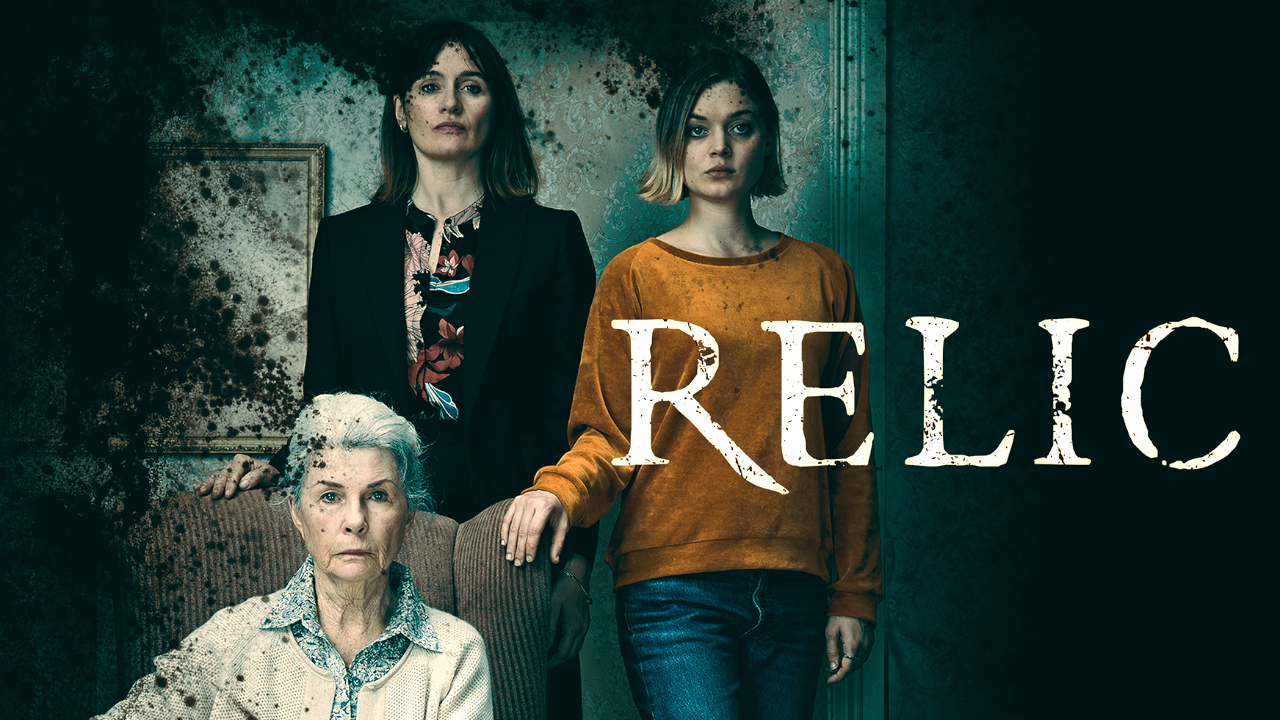
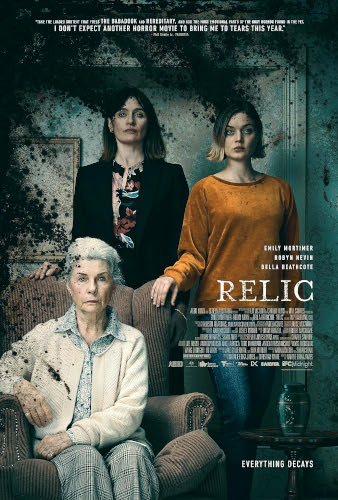
 Relic is a 2020 psychological horror movie filled with dread and dark surprises. Horror Brains dives deep into its shadows, breaking down what works, what fails, and delivering a final verdict.
Intro
Decay doesn’t always arrive with noise. Sometimes it creeps in quietly, settling into the walls, the mind, and the spaces between loved ones. Relic is a psychological horror movie that weaponizes that slow rot, turning a family home into something far more unsettling than a haunted house. At Horror Brains, the genre earns its place when fear cuts deeper than surface shocks, and this film digs straight into the marrow. It’s not interested in cheap scares or loud spectacle. Instead, it builds a suffocating experience where memory fractures, reality bends, and something deeply human begins to unravel from the inside out.
Plot in Brief
A woman and her daughter travel to a decaying rural home after the elderly matriarch disappears. When she returns, something feels wrong, and the house itself begins to reveal a terrifying reflection of her deteriorating mind.
What Works
A fearless blend of genres. Relic walks a razor-thin line between psychological horror and supernatural suggestion without ever fully committing to either side. That ambiguity becomes its greatest weapon. The film doesn’t hand over easy answers, instead letting dread grow through implication. It feels grounded, almost painfully real, yet constantly hints at something far darker lurking just beneath the surface.
Performances that cut deep. The trio at the center delivers performances that feel raw and unguarded. Robyn Nevin, in particular, brings a chilling physicality to her role, shifting from fragile to deeply unsettling without warning. Emily Mortimer and Bella Heathcote ground the emotional core, capturing the quiet panic of watching someone slip away while still standing right in front of you.
Atmosphere so thick it drips. The house is more than a setting; it’s a living organism slowly collapsing in on itself. Dim lighting, tight corridors, and an ever-present sense of confinement create a suffocating mood. Every shadow feels intentional, every creak loaded with tension, turning even the simplest movement into a moment of unease.
Themes that resonate. At its core, Relic is about decay, memory, and the brutal reality of aging. It strips away comfort and forces confrontation with something deeply unsettling: the loss of identity. The horror doesn’t come from what’s hiding in the dark, but from what’s being forgotten in the light.
Cultural depth. There’s a quiet authenticity in how the film handles generational relationships and familial obligation. It doesn’t sensationalize suffering but presents it with a grounded, almost clinical honesty. That restraint gives the story weight, making the horror feel less like fiction and more like an inevitable, shared human experience.
What Fails
Pacing in the middle act. The film’s commitment to slow-burn tension occasionally works against it, particularly in the middle stretch. Momentum stalls as scenes linger just a bit too long without escalation. While the intent is to build dread, it sometimes crosses into repetition, diluting the impact of what should feel like mounting pressure.
Accessibility for casual viewers. This is not an easy watch, and it doesn’t try to be. Viewers expecting clear answers or traditional horror beats may find themselves disconnected. The film demands patience and interpretation, which can limit its appeal to a broader audience looking for more immediate or conventional scares.
Uneven tone at times. The shift between grounded emotional drama and abstract horror imagery isn’t always seamless. Certain moments feel slightly disjointed, as if the film is torn between two identities. While that duality is intentional, it can occasionally pull the viewer out of the experience instead of deepening it.
Final Verdict
Relic isn’t here to entertain in the traditional sense; it’s here to unsettle, linger, and quietly haunt long after it ends. At Horror Brains, the film stands as a reminder that horror doesn’t need volume to be effective. Its power lies in restraint, in suggestion, and in the uncomfortable truths it refuses to soften. It may not satisfy those chasing adrenaline, but for viewers willing to sit with its slow unraveling, it delivers something far more enduring: a chilling, intimate descent into the fragility of the human mind.
Horror Brains Score